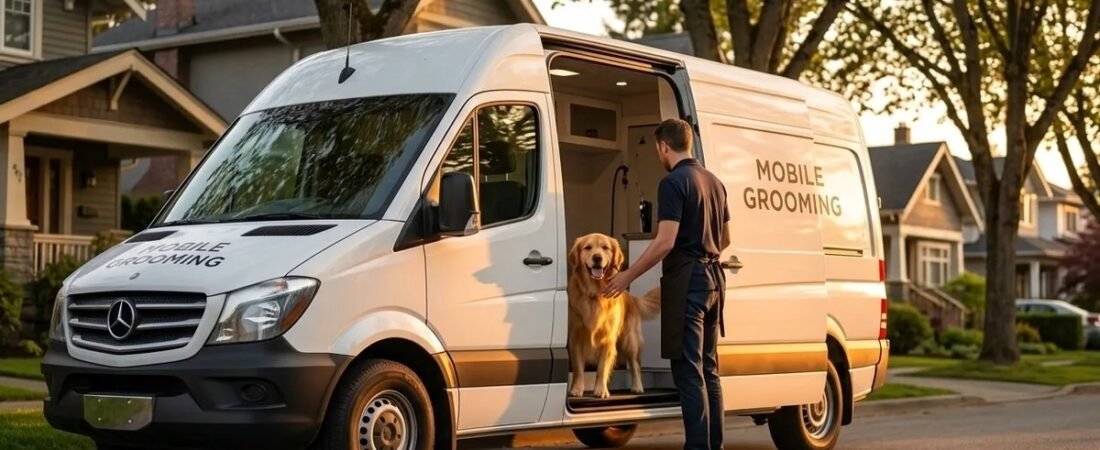
Doodle grooming in Vancouver requires a consistent routine because humid coastal weather, frequent rain, and mixed-texture coats combine to accelerate matting faster than in dry climates. Goldendoodles, Labradoodles, Bernedoodles and Cavapoos all need the same basics to keep their curls soft and healthy: line brushing down to the skin, systematic metal comb testing, and professional full grooming every four to eight weeks.
Why Doodle Coats Mat: Genetics and the Vancouver Climate
Doodles inherit mixed coat genetics. Crossing a Poodle—a single-coated, continuously growing hair breed—with shedding, double-coated breeds like Golden Retrievers, Labrador Retrievers, Bernese Mountain Dogs, or Cavalier King Charles Spaniels produces varied fleece, wool, and hair textures. Instead of falling away freely, shed undercoat hairs become trapped inside adjacent curly guard hairs. Friction and moisture then compact these trapped hairs into dense mats.
Metro Vancouver weather adds continuous environmental friction. According to Environment and Climate Change Canada climate normals, Vancouver records an average of roughly 165 to 169 precipitation days each year. Walks on damp North Shore trails, outings in Richmond, or strolls through South Surrey greenways saturate the coat. When curly hair gets wet and air-dries without combing, the shafts shrink, curl tighter, and lock dead hairs together.
Understanding Your Doodle’s Coat Type
Doodle coats generally fall into three categories, each needing specific upkeep:
- Fleece coat: Soft, wavy, or loosely curled, common in multi-gen Goldendoodles and Australian Labradoodles. It mats quickly when damp or compressed under harnesses.
- Wool or curly coat: Dense, tight curls resembling the Poodle parent. As detailed by the American Kennel Club guide to Poodle coat care, continuously growing hair traps loose debris near the skin and requires daily detangling.
- Hair or flat coat: Straight or wiry coat resembling the retriever or spaniel parent. It sheds more freely but still knots around the ears, chest, and legs.
Matting is most severe during the puppy coat transition, usually between 7 and 14 months of age. As adult hair grows in beneath soft puppy fluff, the two layers tangle rapidly. For preparation tips, see our puppy first grooming guide.
At-Home Maintenance: Line Brushing and the Comb Test
The most frequent grooming mistake is surface brushing. Stroking a slicker brush over the surface leaves curls fluffy on top while dense mats form unnoticed against the skin. Preserving coat length requires line brushing down to the dermis.
How to Line Brush Step-by-Step
Use two essential tools: a long-pin slicker brush and a steel greyhound comb. As noted by veterinary authors at VCA Animal Hospitals, brushing to the skin aerates follicles, distributes natural oils, and removes debris before it causes inflammation.
- Step 1: Part the hair. With your spare hand, hold the coat upward until you see a straight line of bare skin.
- Step 2: Brush from the base. Using the slicker brush, gently pull a thin layer of hair downward from that parting line, stroking outward from the root. Never scrape wire pins hard across sensitive skin.
- Step 3: Work in layers. Release another thin section and brush down. Work systematically across paws, legs, ribs, spine, chest, tail, and ears.
- Step 4: Focus on friction spots. Thoroughly check the armpits, groin, collar line, harness edges, and behind the ears.
The Comb Test: Verifying You Are Truly Mat-Free
Never conclude brushing without the comb test. Place the teeth of a metal greyhound comb right at the skin line and pull gently outward through the hair tips. If the comb slides freely from roots to tips, the coat is detangled. If it snags, you have located an early knot that must be separated by hand and brushed out before it tightens.
Doodle Coat Care and Grooming Schedules
Booking frequency depends on coat style, lifestyle, and home brushing habits. Doodles hiking muddy trails in North Vancouver need closer attention than dogs in short clips. For general breed timelines, read our guide on how often to groom your dog.
| Doodle Breed | Common Coat Type | Home Brushing | Full Groom Cadence | Common Haircut |
|---|---|---|---|---|
| Goldendoodle | Wavy fleece or curly | Daily to every 2 days | 4 to 6 weeks | Teddy Bear, Summer Cut |
| Labradoodle | Dense fleece or wool | 3 to 4 times weekly | 4 to 6 weeks | Teddy Bear, Utility Clip |
| Bernedoodle | Heavy double or fleece | Daily line brushing | 4 to 6 weeks | Teddy Bear, Lamb Cut |
| Cavapoo | Silky fleece or soft curl | 3 times weekly | 6 to 8 weeks | Puppy Cut, Teddy Bear |
Common Doodle Haircut Styles
During a full groom, your stylist can tailor styling to your routine:
- The Teddy Bear Cut: The most popular doodle look. Body hair is trimmed to a uniform length (typically 1/2 to 1 inch), while the head and muzzle are hand-scissored into a soft, round shape with rounded ears. Requires committed home brushing.
- The Puppy Cut: A clean, uniform length (usually 1/2 inch) across the entire body, legs, and face. Easy to maintain and great for outdoor play.
- The Summer Cut: Clipped short (around 1/4 to 3/8 inch) on the body, with a slightly fuller head and tail. Significantly shortens drying and cleaning time during rainy Pacific Northwest seasons.
- The Lamb Cut: A classic styling with a shorter body blend into fuller, neatly hand-finished legs.
The Dangers of Severe Matting: Health and Humane Care
Matting is a health and welfare issue, not just a cosmetic flaw. When trapped hairs felt together, they form a tight sheet that pulls the skin with every step.
Veterinary guidance from PetMD on managing mats in dogs notes that pelted coats restrict cutaneous blood circulation, trap moisture and dirt, and create environments for bacterial dermatitis, sores, and yeast infections. On legs and tails, tight mats can restrict blood flow and lymphatic drainage.
Why Severe Mats Cannot Be Brushed Out
Ripping through tight mats is painful and tears delicate skin. For nervous pets, aggressive detangling causes lasting fear; see our recommendations for grooming anxious dogs. Professional groomers follow the standard of “humanity before vanity.” When hair is felted to the skin, clipping beneath the mat is the only humane option. Never use household scissors to cut mats at home. Dog skin bunches into knots easily, making accidental cuts a frequent cause of emergency vet visits.
Post-Shave Care and Complications
Once tight mats are removed, blood flow returns and skin sensations change. Pet owners should watch for:
- Ear hematomas: After tight ear mats are removed, some dogs shake their heads hard because the skin feels different. Violent head shaking can break blood vessels in the ear flap and cause a blood-filled swelling, as VCA Animal Hospitals explains. If an ear flap looks puffy after a groom, call your vet.
- Skin Irritation: Skin covered by damp mats is often red and irritated. Prevent excessive licking or scratching while it recovers.
- Sun Sensitivity: Shaved skin lacks sun protection. Keep dogs in shaded areas or use a light protective vest.
Mobile Doodle Grooming Across Metro Vancouver
Maintaining a doodle coat is straightforward with regular mobile care. Vancouver Mobile Dog Grooming brings a calm grooming setup right to your home. We groom one dog at a time in our van, so there are no car trips and no holding cages.
A full groom includes a warm bath, fluff drying (no cage dryers), haircut, ear cleaning, sanitary trim, paw pad shave, nail trim and grind, and de-shedding undercoat removal where needed. We also offer standalone mobile dog nail trimming and bath-and-brush visits between styling sessions.
Full grooms start at $65 for dogs under 10 lbs, $79 for 10–20 lbs, $105 for 20–45 lbs, $139 for 45–75 lbs, and $179 for 75+ lbs. Bath & brush packages start at $55–$95. For light knotting, de-matting is $25 per 15 minutes. For severe pelting, we assess the coat and always call you before doing a shave-down. See full details on our mobile dog grooming pricing page.
We charge no travel fees anywhere in our service area, including South Surrey, White Rock, Surrey, Langley, Delta & Ladner, Tsawwassen, Richmond, Burnaby, Vancouver, North Vancouver, West Vancouver, New Westminster, Coquitlam, Port Coquitlam, and Port Moody. See mobile dog grooming in Vancouver and mobile dog grooming in South Surrey for local details.
To book your appointment, visit our contact page or call or text (778) 807-7627. Open Monday to Friday 8 AM – 8 PM, Saturday 8 AM – 7 PM.
FAQ
How often should a Goldendoodle or Labradoodle be groomed in Vancouver?
Most doodles in Metro Vancouver require a full groom every 4 to 6 weeks. Dogs kept in short utility cuts with daily home brushing can stretch appointments to every 6 to 8 weeks.
What is the difference between line brushing and surface brushing?
Surface brushing only straightens the top layer of hair, leaving mats to form near the roots. Line brushing parts the hair down to the skin so you can brush each layer from the base outward, followed by a metal comb to ensure no knots remain.
Why does wet Vancouver weather increase doodle matting?
Rain soaks curly coats, and as the hair air-dries, it contracts and twists around loose undercoat strands. Wet walking harnesses and raincoats also cause intense friction in the armpits and chest, accelerating tangling.
Can severely matted doodle coats be saved without shaving?
No. When mats fuse close to the skin, brushing them out pulls painfully and damages the tissue. Humane grooming standards require shaving beneath the mats with electric clippers to allow the skin to heal.
Are there travel fees for mobile grooming visits?
No. Vancouver Mobile Dog Grooming charges no travel fee within our entire service area across Metro Vancouver.