Vancouver’s rainy season from October through April brings persistent dampness and mud that challenge your dog’s skin, coat, and paws. Keeping your dog comfortable requires drying deep into the undercoat, keeping paw pads clear of grit, and brushing damp fur before mats settle. Adjusting grooming intervals and scheduling an interim bath and brush between full haircuts prevents painful matting, bacterial hot spots, and fungal dermatitis.
Why Vancouver’s Wet Months Challenge Canine Skin and Coats
Coastal British Columbia winters bring months of saturated ground and frequent rainfall. According to the Environment and Climate Change Canada Canadian Climate Normals, Vancouver International Airport averages 1,152.8 millimetres of rainfall annually, peaking at 120.7 mm in October, 185.8 mm in November, 148.3 mm in December, and 157.5 mm in January. Daily walks expose dogs to persistent water, road grit, and mud.
Continuous dampness breaks down coat protection. In double-coated breeds like Retrievers and Shepherds, dense undercoats absorb water like sponges. In curly breeds like Doodles, damp hair quickly felts under walking friction. Trapped against the dermis, moisture and body heat create an ideal breeding ground for yeast and bacteria.
The Proper Drying Routine: Beyond the Quick Towel Rub
A quick front-door rub with a cotton towel clears only surface moisture from topcoat guard hairs, and vigorous rubbing can twist damp strands into tangles. A proper post-walk drying routine protects both skin and coat:
- Press and squeeze: Use microfibre towels to squeeze moisture out of legs, chest, belly, and tail without knotting hair.
- Separate coat layers: Part fur with a wide-toothed comb to check the skin. In humid coastal air, a thick undercoat can stay damp for hours, giving bacteria time to multiply.
- Use low, controlled heat: If using a home dryer, choose the cool or lowest warm setting held six inches away. Professional high-velocity dryers blow water off with air volume; standard hair dryers run hot and can burn sensitive skin.
- Brush while finishing: Use a slicker brush and metal comb once fur is nearly dry, working gently down to the skin to clear early tangles.
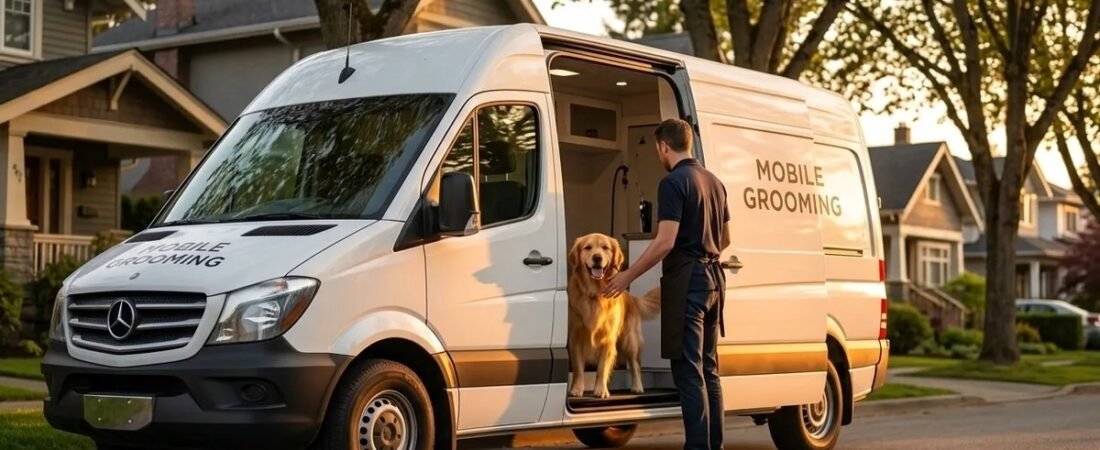
Vancouver Mobile Dog Grooming never uses cage drying. Every pet is hand and fluff dried one-on-one inside our van, separating coat layers and eliminating lingering dampness near the skin.
Preventing Hot Spots and Damp-Coat Skin Problems
Trapped moisture and poor airflow trigger frequent seasonal skin issues in the Pacific Northwest.
Acute moist dermatitis, commonly known as a hot spot, occurs when surface skin becomes damaged and inflamed, allowing normal bacteria to multiply rapidly. According to VCA Animal Hospitals on hot spots in dogs, these moist, red sores often start from a minor scratch, damp undercoat, or small mat. As the dog licks and scratches, lesions can spread across several inches within hours.
Persistent dampness also encourages yeast dermatitis caused by Malassezia overgrowth. Warm, humid skin folds create ideal conditions for yeast blooms. Watch closely for signs in these friction-heavy zones:
- Armpits and groin: Wet hair rubbing during walks leads to chafed, greasy, red skin with a sour odour.
- Under damp collars: Wet fabric collars hold water against the neck. Remove wet collars as soon as your dog comes inside.
- Ears: Heavy or folded ears trap humidity in the canal, causing wax buildup, redness, and head shaking.
Mud, Mats, and Paw Care: Protecting Footpads and Toes
Your dog’s paws absorb the brunt of wet weather. Long fur between paw pads traps wet silt and gravel. As mud dries, it hardens into tight knots between pads, pressing painfully against webbing with every step.
Continuous moisture and grit can cause pododermatitis, an inflammatory condition of the paws marked by redness, swelling, and secondary infection. Dogs with irritated paws chew their feet constantly, staining fur reddish-brown and worsening inflammation.
Protect paw health during the wet season with three simple steps:
- Shave paw pad hair flush: Keeping pad fur trimmed short stops mud from clumping and improves grip on slick surfaces. Regular foot care and mobile dog nail trimming keep feet healthy and balanced.
- Rinse and blot: Swish muddy paws in lukewarm water or wipe them with a damp cloth to remove road grit before drying. Gently dry between each toe.
- Apply protective balm to clean pads: Use pet-safe paw wax to repel moisture, applying it only to clean, fully dry pads so you do not seal damp grit against the skin.
Grooming Frequency: When a Bath and Brush Between Full Grooms Helps
As discussed in our guide on how often you should groom your dog, rainy weather increases maintenance needs even when you want to keep coats longer for winter warmth. Leaving a coat unwashed and unbrushed for several months often leads to pelt matting that requires a close shave.
Scheduling an interim bath and brush between full haircuts solves this challenge. While a full groom includes a styled haircut, a bath and brush focuses on hygiene: deep cleansing bath, blow-dry, brush-out, undercoat removal, nail trim and grind, ear cleaning, sanitary trim, and paw pad shave.
Based on our mobile dog grooming pricing, a full groom ranges from $65 for dogs under 10 lbs up to $179 for dogs 75 lbs and over. In comparison, an interim bath and brush costs starting at $55 to $95 depending on size. Adding this interim service keeps the coat clean, detangled, and dry without shortening winter coat length.
| Coat Type | Rain Exposure | Schedule | Recommended Service | Key Seasonal Benefit |
|---|---|---|---|---|
| Double-Coated (Retriever, Shepherd, Husky) | Daily wet walks & trails | Every 4 to 6 weeks | Bath & Brush (plus De-shedding add-on) | Clears dead undercoat; eliminates trapped moisture causing hot spots. |
| Curly / Fleece (Doodle, Poodle, Bichon) | Frequent rain walks | Every 4 to 6 weeks alternating | Full Groom rotated with Bath & Brush | Preserves coat length while clearing friction mats behind ears, chest, and legs. |
| Smooth / Short (Boxer, French Bulldog) | Daily neighbourhood walks | Every 6 to 8 weeks | Bath & Brush | Washes grit out of coat and skin folds; keeps paw pads trimmed and clean. |
| Silky / Drop Coat (Spaniel, Yorkie, Maltese) | Frequent wet walks | Every 4 to 5 weeks | Full Groom rotated with Bath & Brush | Trims undercarriage drag hair that collects mud; prevents leg mats. |
If wet fur has formed dense mats, professional de-matting is $25 per 15 minutes. For severe pelt matting where brushing causes pain, a humane shave-down is the safest path, and we always call to discuss options with you first.
Signs Your Dog Should See a Veterinarian
While routine grooming through mobile grooming services supports coat health, groomers cannot diagnose medical conditions. Saturated skin can quickly progress to infections requiring veterinary care. Contact your veterinarian if you notice:
- Red, weeping, or oozing skin: Warm, raw patches that lose hair rapidly indicate an active hot spot requiring medical clipping, antiseptic cleansing, or antibiotics.
- Persistent paw chewing or limping: Constant foot licking, swollen toe webbing, or reluctance to bear weight suggests deep pododermatitis or an embedded burr.
- Strong yeasty or sour odour: Musty smells coming from ears, armpits, or paws that linger after washing indicate bacterial or yeast overgrowth.
- Extreme sensitivity or guarding: Whimpering, snapping, or pulling away when paws, ears, or belly are touched signals pain and active inflammation.
Book Convenient At-Home Care This Rainy Season
Transporting a freshly groomed dog through the rain or loading a wet pet into your car is an unnecessary chore. Vancouver Mobile Dog Grooming brings one-on-one care straight to your home across Metro Vancouver, including South Surrey, White Rock, Surrey, Langley, Delta, Ladner, Tsawwassen, Richmond, Burnaby, North Vancouver, West Vancouver, New Westminster, Coquitlam, Port Coquitlam, Port Moody, and Vancouver. With our personalized mobile dog grooming service, your pet receives attentive care with no cage drying, no travel fees in our service area, and no extra charge for anxious pets.
We are open Monday to Friday from 8:00 AM to 8:00 PM and Saturday from 8:00 AM to 7:00 PM (closed Sunday). Call or text (778) 807-7627 to book an appointment, or send an inquiry through our contact page.
FAQ
How often should I groom my dog during Vancouver’s rainy season?
Most dogs benefit from professional grooming every 4 to 6 weeks from October through April. Alternating full haircuts with interim bath and brush visits removes mud, sheds dead undercoat, and prevents knots while preserving winter coat length.
Can walking in the rain cause hot spots on my dog?
Rain alone does not cause hot spots, but trapped moisture under dense undercoats or wet collars creates an ideal breeding ground for bacteria. Scratching the irritated skin breaks the surface, quickly creating an acute hot spot.
Why do my dog’s paws smell like corn chips in wet weather?
This scent comes from natural yeast and bacteria on canine skin. When moisture and dirt sit between paw pads during rainy walks, these organisms multiply quickly. If the odour accompanies redness, swelling, or constant licking, consult your vet.
Should I use a towel or a blow dryer after wet walks?
Use both. First, blot and press with a microfibre towel to remove surface water without tangling fur. Then finish with a blow dryer on a cool or low setting, parting fur to dry the undercoat completely to the skin.
What is the advantage of a bath and brush over a full groom in winter?
A bath and brush provides a wash, blow-dry, brush-out, paw pad shave, sanitary trim, and nail grind without trimming body length. It removes grit and undercoat at a lower price point ($55 to $95 by size) while preserving coat warmth.